

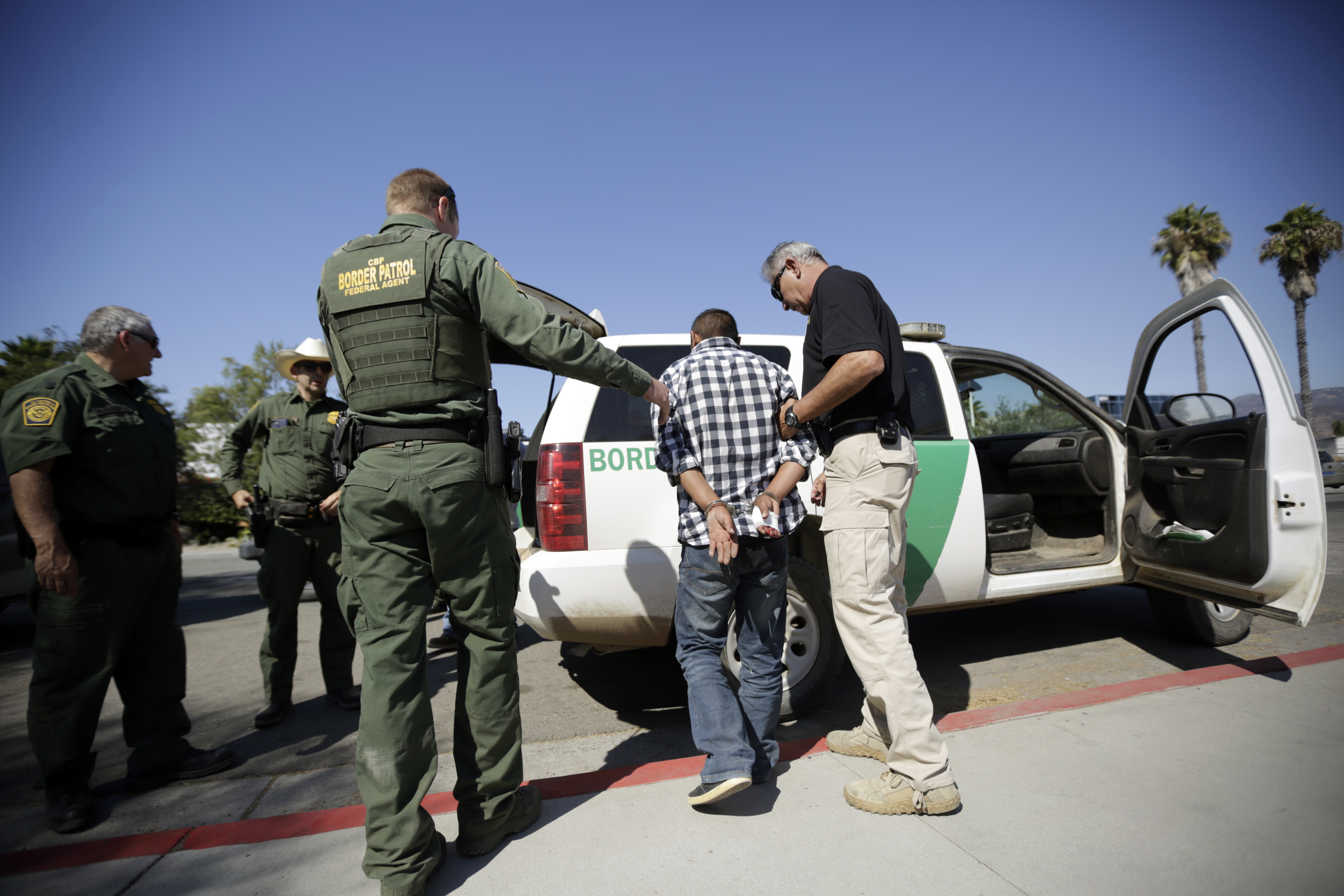
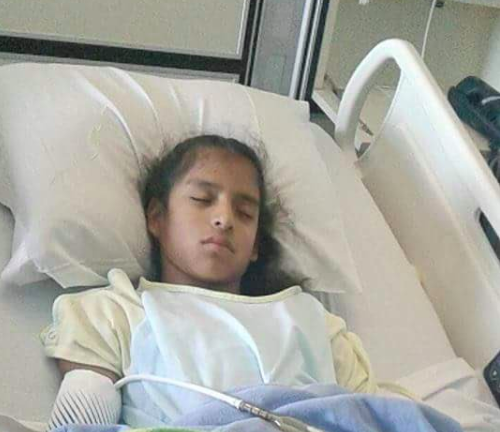
Last week’s Border Patrol detention of Rosa Maria Hernandez, a 10-year-old girl with cerebral palsy intercepted on her way to a hospital, drew national media attention, but it did not represent a unique experience for families on the border. For them, the security checkpoints that led to Rosa Maria’s detention are part of everyday life.
On Oct. 31, the American Civil Liberties Union filed a lawsuit for Rosa Maria’s immediate release. She had been stopped en route to Driscoll Children’s Hospital on Oct. 24. Border Patrol officers followed her and detained her after surgery.
Separated from her family, she has been recovering in a San Antonio detention center and faces deportation to a nation she left as a 3-month-old infant. Her mother is also undocumented and has been unable to visit her at the shelter. As her case drags on, it could be months before Rosa Maria, who is reported to have the cognitive development of a 6-year-old, will be able to see her family.
“What you’re seeing with these checkpoints is not about national security. It’s about terrorizing immigrant communities.”
Detentions at checkpoints are common, according to Edith Cedillo, who works with immigrant families through Catholic Charities in Laredo, where Rosa Maria and her family live. “A lot of the people are scared to come out to tell their story of what happens to them,” she says.
“In this case with Rosita, her mother voiced her concern and that’s how the story was able to get out,” Ms. Cedillo says. Undocumented immigrants who live in Laredo but need surgery in San Antonio “are basically turning themselves in” when they pass through a checkpoint, she says.
The same is true in border cities like El Paso, Tex., and Las Cruces, N.M., according to Dylan Corbett, director of the Hope Border Institute. The Las Cruces Diocese celebrates a eucharistic congress each year that takes place in two locations—one on each side of a security checkpoint.
“It interferes with the church reality,” Mr. Corbett says. “What you’re seeing with these checkpoints is not about national security. It’s about terrorizing immigrant communities.”
To lower the impact of a possible deportation, mothers will go to one Mass, fathers to another, dividing the family.
Mr. Corbett shares the story of a young woman who recently graduated from a Texas university. Her older brother, undocumented and afraid to try to pass through checkpoints, was unable to attend her graduation. Aunts and uncles, unable to visit newborn nieces and nephews, are left to interact with family celebrations via smartphone screens.
“The impact of greater enforcement is family separation,” Mr. Corbett says.
Border Patrol security measures may also be harming hurricane recovery efforts. On Nov. 1, the Texas Association of Builders told state senators that there were too few workers to rebuild Houston after Harvey, the Houston Chronicle reported. The association blamed the broken immigration system for the lack of labor.
“Immigrants in Texas feel a great deal of fear related to the enforcement of security law,” says Jennifer Carr Allmon, executive director of the Texas Catholic Conference. She adds that some undocumented immigrant families in Houston were afraid to ask for help after the hurricane.
To lower the impact of a possible deportation, mothers will go to one Mass, fathers to another, dividing the family. “If both mom and dad are deported, the kids will end up in foster care,” she says. “Most of our immigrant families are just uncertain about what is a safe activity and what is not.”
“Most of our immigrant families are just uncertain about what is a safe activity and what is not.”
Ms. Allmon notes “the fear and anxiety” Rosa Maria’s mother “must have felt, putting her child in an ambulance and not being able to accompany her daughter. She tried to make the best decision for her family, and now her daughter is detained.”
While U.S. bishops acknowledge the right of a nation to control its borders, Ms. Allmon says security “needs to be targeted, humane and proportional.”
In many towns and cities along the divide with Mexico, a reality that defies checkpoints and border enforcement persists. Despite talk in Washington of higher walls, “it’s one community,” Ms. Allmon explains. “The family and business relationships are on both sides of the border.”


 Posts
Posts


No comments:
Post a Comment